Carrots and round-shot
Almost exactly three years ago I went to Brussels for a few days. On one of those days I went out to the Waterloo battlefield. I’m not sure I can recommend the place for a swift bout of midwinter tourism – unless the battle has had a grip on your imagination for years and years, that is.
There’s a colossal conical mound to commemorate the Prince of Orange stopping a bullet. There’s a pretty good museum underground. There’s a perfectly passable restaurant above ground. The rest of it is agricultural land interspersed with small (and regiment-specific) war memorials. I was content to wander around for all the hours of daylight.
I’m glad I was there on my own. Had I made the trip with, say, a fiancée, she’d have been well within her rights to question the need for traipsing past a field of carrots yet again just because I wanted to see it from another angle. Indeed, she’d have been a wise woman to have ditched me there and then and grabbed an earlier train back to Brussels and out of my life.
But I’m rambling.
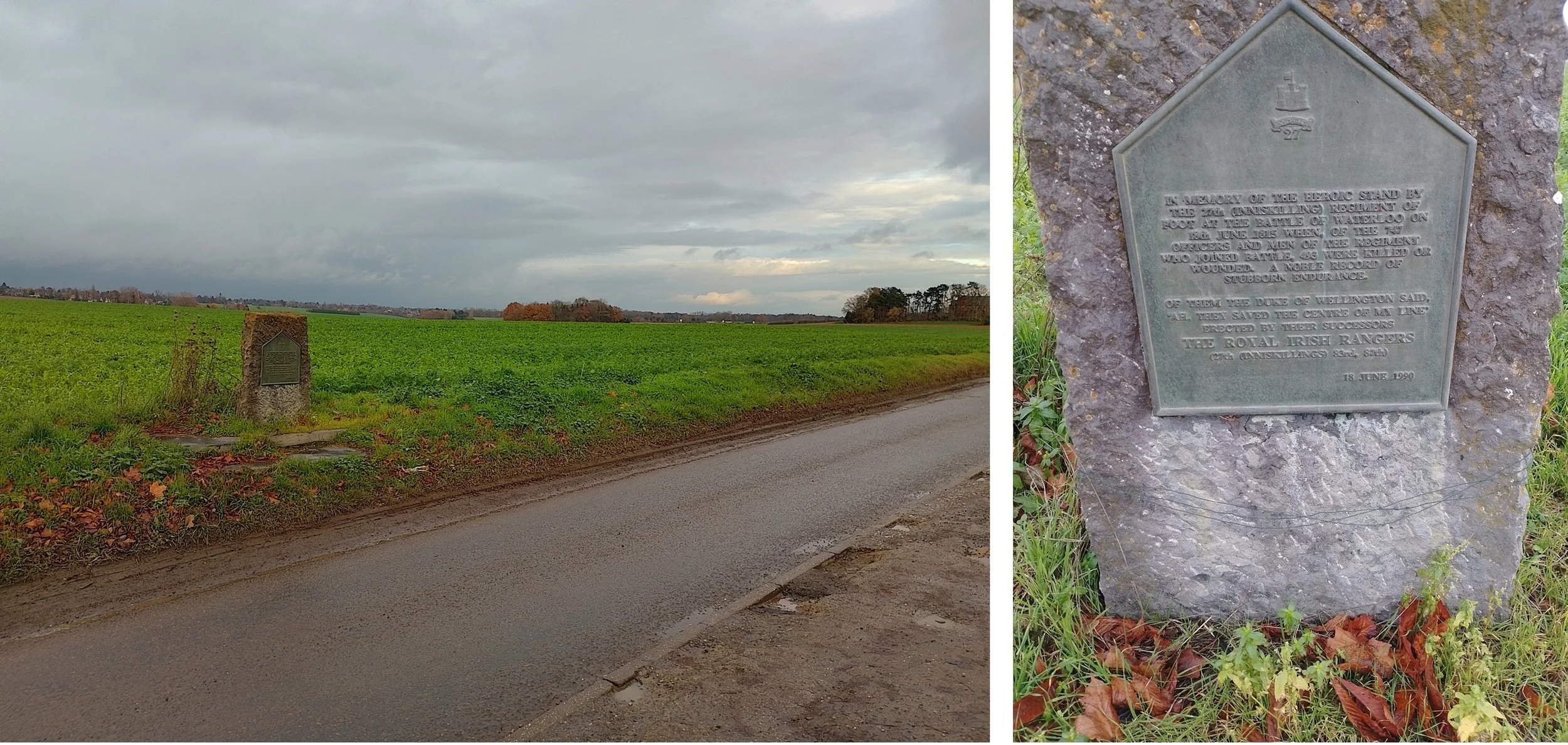
Just a field.
More Fusiliers, but not Munsters.
This was where the 27th Foot – later the Royal Inniskilling Fusiliers – stood. Here are commemorated the 493 out of 747 men of the regiment who became casualties. I’d been curious to see the spot since I’d first read about them.* They were formed up in square as a defence against French cavalry. The tactic worked, but also made them a fine target for French artillery. It was their pride that at the end of the day all their dead and wounded were still in square. No one had tried to run.
Johnny Kincaid of the 95th remembered:
The twenty-seventh regiment were lying literally dead, in square, a few yards behind us... I had never yet heard of a battle in which everybody was killed; but this seemed likely to be an exception...
I looked at the undulations in the ground and wondered how big a cavalry force you could hide in the drifting powder smoke, and how well your nerves could stick it with the 12-pounder round-shot howling out of the same smoke, and you just having to stand there and hope.
Heroic from this distance: pretty damned unnerving up close.
* Either in Sharpe’s Waterloo by Bernard Cornwell or Wellington: the Years of the Sword by Elizabeth Longford – which I’d have read off the back of the Sharpe books. I forget.
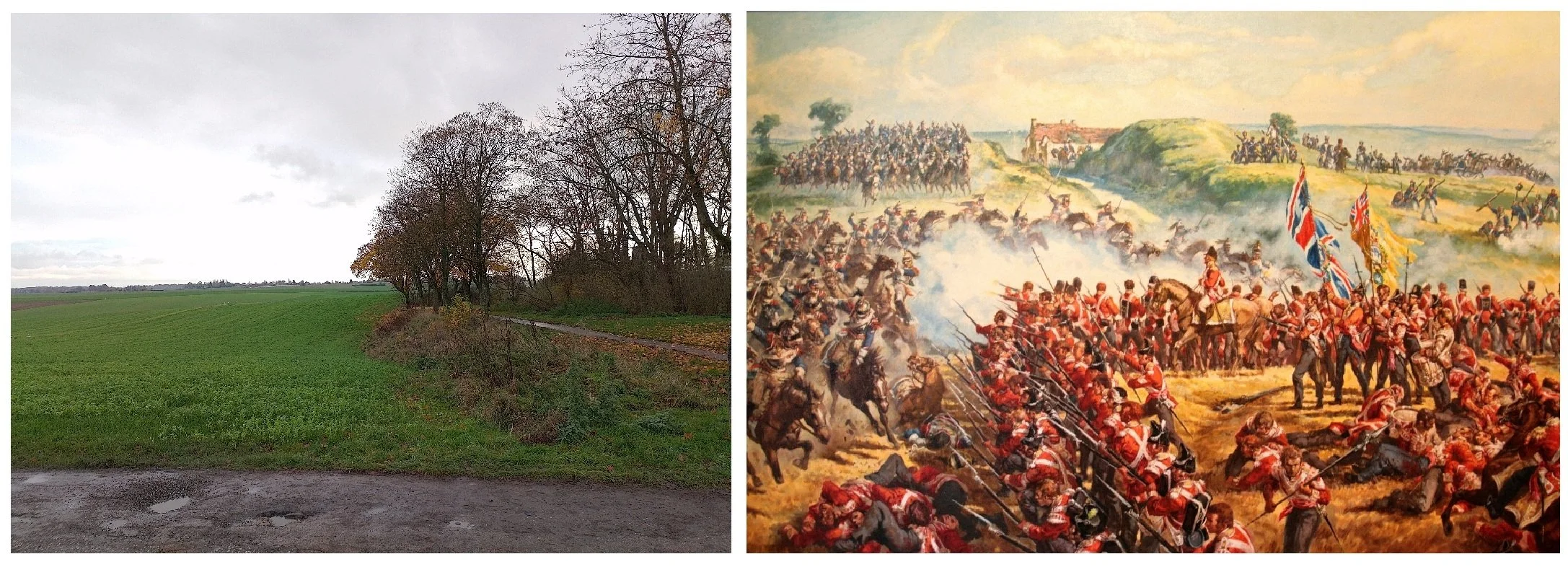
As their memorial says, “A Noble Record of Stubborn Endurance”.